

The Room
Shanghai has a name for the café owner who sells their own idea of good taste first and the coffee second, and lately it isn’t a compliment.
Chinese social media has a whole genre of skits about these owners, titled some version of “When I accidentally wandered into a zhǔlǐrén (主理人) café.” You just walked in. The wood is raw, the cups are stylishly primitive ceramic, and a single dried branch leans in a vase, working hard to look like nobody arranged it. A vinyl record is playing. An imperious cat clearly lives here. You order an Americano. The owner tells you about it in Chinese, with some French and English mixed in. It’s a Panama red-label Geisha. Emerald Estate. Cold-fermented. Washed. The mythology takes longer than the brewing. Then you ask if they could make it a little sweeter. This time the owner needs only one language: no. By the time you pay, you know exactly who is in charge. That’s what the word means.
Zhǔlǐrén translates roughly as “the person in charge.” China borrowed it from Japanese, and it caught on first in streetwear, underground rap and street dance. There it meant a small, independent operator with a personality and a style of their own. So when café and restaurant owners took the title, it was a compliment they paid themselves. It sounded better than plain “boss.” Then the internet rewrote it. Add two characters and zhǔlǐrén becomes zhǔdǎ bù lǐ rén: the one who specializes in ignoring you.
Drop a brick in Shanghai, the joke goes, and it lands on ten zhǔlǐrén. The joke travels, because creative people everywhere are hearing the same 2026 sermon. Its loudest preachers include the people selling the software, and the congregation meets on LinkedIn and twitter. It goes like this. AI can now make the app, the website, and, more and more, itself. At one of the biggest AI labs, by May of this year, its own AI was writing more than 80 percent of the code merged into its production codebase. What it can’t make yet, the sermon continues, is the call on what’s good. That call is your taste, a word that used to be a compliment and has lately become something to max out: the most valuable thing you own, and the one thing the machine can’t match. Guard it. Build on it. Charge for it. Shanghai was living the sermon before anyone preached it, cats included.
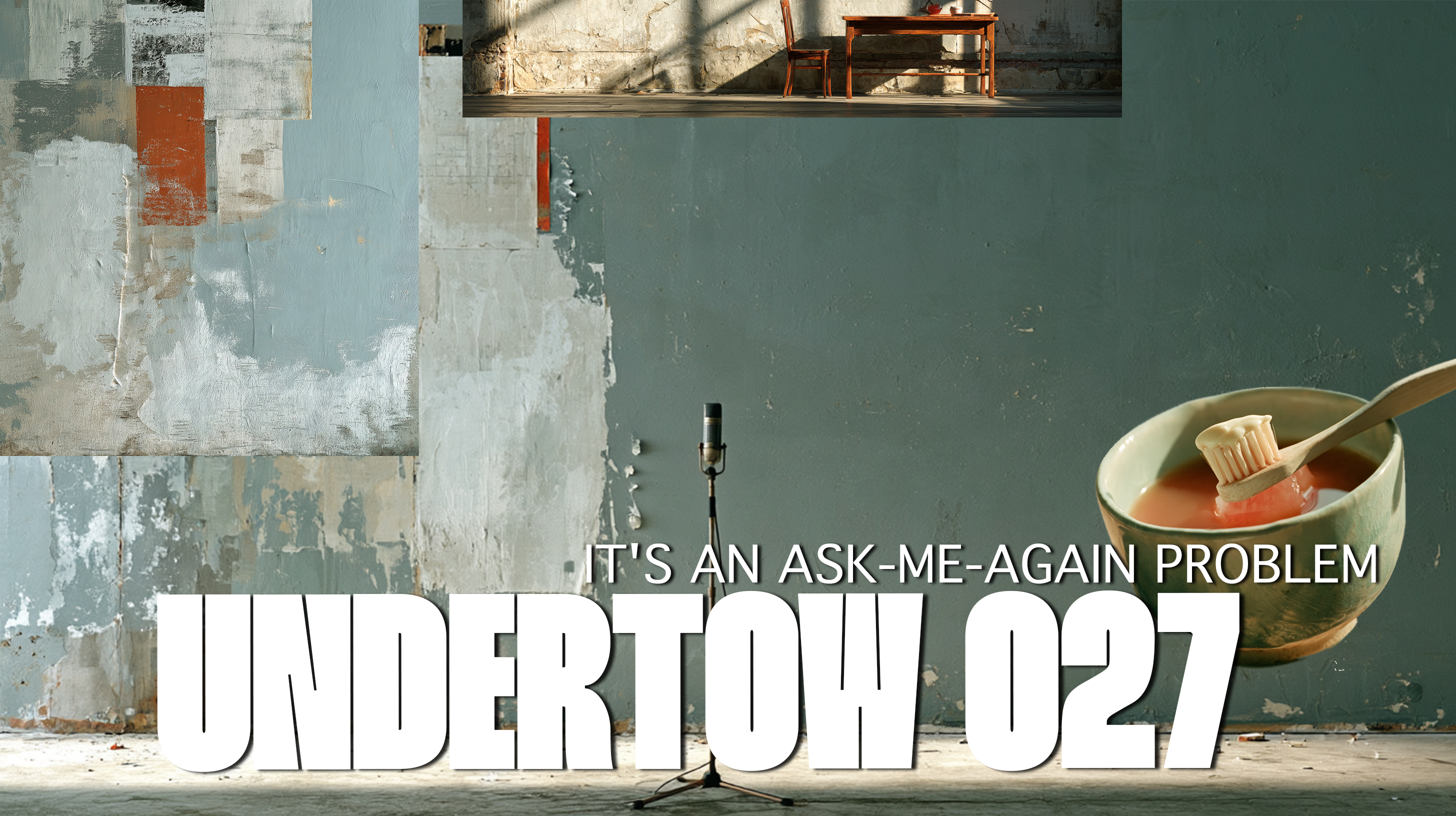
Xinrou Shu went to meet one of them, a café owner named Andy, for “How to Spot a Zhǔlǐrén,” the Peking Quack piece that started this essay. He’d argue with the label. He calls himself a workhorse. A café, he says, is still a service business. In 2019 the routine of a government-affiliated job wore him down, so he quit. His café is called Fat Face. Its Shanghai shop went viral for a watermelon Americano with a toothbrush laid across the cup and cream on the toothbrush. It comes with instructions. Sip the coffee. Taste the cream off the brush. Stir with the toothbrush. Take the toothbrush home.
The idea came one morning. He rested his toothbrush across his coffee cup to answer the door for a delivery. When he came back, he liked how it looked.
The shop also has a vintage chair. It cost Andy more than 2,000 yuan, and it used to sit in his home. If a customer carries it outside, he will object. A small shop, he told Shu, lets him follow his own logic: “You either accept it or you don’t.” He compares it to inviting someone over and asking them not to sit on your bed. If the guest sits somewhere else, the conversation goes on. If the guest insists, “perhaps we cannot be friends.”
That’s the attitude people make fun of. It’s also something many people who sell their taste for a living don’t have: the right to set the rules of the room, down to where a chair is allowed to go.
The freedom has limits. Many of their customers arrive through two apps they don’t control. Dianping is China’s version of Yelp. Xiaohongshu is an Instagram-like app where people post what they ate and where.
Rent can close even a good one. The team behind a café called THE PRESS has journalism backgrounds. Before the café, they ran a tiny coffee stand next to the old Shenbao newspaper building. It was about the size of a parking space, and people liked it. Rent, among other things, closed it after a little over two years. The lease is the one piece of paper in the room the owner doesn’t write. The zhǔlǐrén rules the room but rents the street.
The Sale
Blue Bottle started in a room, too.
By 2001, James Freeman had spent years as a professional clarinetist. By his own account, he was only good enough to get the gigs he didn’t want. He rented a potting shed in Oakland for $600 a month. It was 186 square feet, about the size of a bedroom. He roasted coffee in it, seven pounds at a time. He loaded the beans into his Peugeot station wagon and drove them to farmers’ markets in Berkeley and Oakland. Within a few years, people were lining up.
It’s the zhǔlǐrén story with an East Bay accent. One person’s taste. One small room. A line out the door.
Then the taste outgrew the room. By 2017 Blue Bottle had dozens of cafés in the United States and Tokyo. That year Nestlé, the company behind Nescafé and Nespresso, bought 68 percent of it. Reuters reported the price at about $425 million. Freeman stayed on to look after the coffee. For the company, he told the San Francisco Chronicle, the deal meant security. “We don’t have to do an IPO,” he said.
This year, Nestlé sold Blue Bottle on. The buyer is Centurium Capital. Centurium is also the controlling shareholder of Luckin Coffee, China’s biggest coffee chain. Luckin made its name with cheap coffee. It helped start a price war that pushed a cup in China down to 9.9 yuan, about $1.40. Caixin reported that Centurium paid less than $400 million. One of the cafés in the deal is in Pudong, Shanghai, the same city where a dropped brick lands on ten zhǔlǐrén.
Nestlé didn’t sell all of it. Centurium got the cafés, more than 100 of them across the United States and Asia. It also got most of the bags and cans of Blue Bottle coffee sold in stores. Nestlé kept the Blue Bottle pods made for its Nespresso machines. Its chief executive told analysts the pods are “quite successful,” so Nestlé plans to keep selling them.
The cafés are where people choose the coffee and make it, every morning, by hand. The pods sit in kitchen cabinets and sell from a shelf. Both carry the Blue Bottle name. By the end, the name had become something you could cut in two and sell in pieces, like a building or a back catalog.
By the end, the name had become something you could cut in two and sell in pieces, like a building or a back catalog.
None of this was taken from Freeman. He sold, he stayed, and the company got its security. That’s the old bargain working the way it’s supposed to. A clarinetist’s eye built a company, and the company kept going, under owners who traded it twice. You get the check. Sooner or later, the thing you made goes on without you.
The Person
On July 22 this year, a K-pop group reappeared after more than a year of silence, and the woman who built it watched from outside.
The group is NewJeans. If you don't follow K-pop, check the receipts. They debuted in the summer of 2022 by dropping a music video before the members had even been introduced, the opposite of how K-pop launches anything. A year later, their second EP debuted at No. 1 in America, beating the Barbie soundtrack by 500 units. Less than two years after their debut, they filled the Tokyo Dome on back-to-back nights, 91,200 people in all. By August this year, their songs had been played more than 8 billion times on Spotify, about once for every person on Earth. The fans call themselves Bunnies.
The bunny, the look and the group itself were shaped by one person’s taste, with a team around her. Min Hee-jin started at SM Entertainment in 2002 as a graphic designer and spent sixteen years shaping the look of some of K-pop’s biggest acts, including Girls’ Generation. In 2021 HYBE, the company behind BTS, gave her a label of her own to run. It was called ADOR. HYBE owned the label, and the label managed the group. She oversaw NewJeans from choosing the members to their debut. Korean media simply called it “Min Hee-jin’s girl group.” In its first full year with NewJeans, her label went from losing money to about $25 million in operating profit.
Then, in 2024, she and HYBE fell out in public. HYBE accused her of trying to take control of the label. She accused HYBE of copying NewJeans with another of its groups. In the week the fight broke open, about $770 million came off HYBE’s stock market value.
The courts have since handed each side wins. One ruling found she was owed about $18 million for her shares, which HYBE is appealing. Another bound the members to ADOR until 2029 and found that their personal trust in Min didn’t make her essential to their contracts. She had already left ADOR in 2024, and now runs a small new label of her own.
In February, two weeks after the share ruling, Min offered to give the money up if HYBE dropped every lawsuit connected to the fight. That included the ones involving the members. The most urgent reason, she said, was the NewJeans members. The fight went on.
That brings us back to July 22, the group’s fourth anniversary. At midnight in Seoul, ADOR posted five one-minute videos called “2026 Summer of NewJeans.” In the videos, four of the members live separate, complicated lives. Small magical things keep happening around bunnies. By the end, the four find their way back to each other. It was the first official video of the four together in about two years. The fifth member, Danielle, was gone; ADOR had ended her contract the previous December.
Min wasn’t in the room. A Korean sports paper ran the story under a headline saying she may be gone, but the “NewJeans DNA” remains. The company’s creative director now is Kim Na-yeon, who worked beside Min for years and helped make the bunny. Kim still had a say in what happened to it. Min no longer did.
In the two years after September 2024, while the group put out no new songs and the lawyers did most of the talking, people played NewJeans songs on Spotify about 3 billion more times.
Min didn’t lose her eye. She lost the right to use it on the thing it made. The name, the bunny and the songs stayed with the company, and the remaining members stayed under contract. The plays keep coming. She took her eye to a new room to start again.
Min didn’t lose her eye. She lost the right to use it on the thing it made.
The Turn
Most of Min’s story has happened before. Founders get pushed out of the companies they built. Labels own the recordings. Old songs keep playing long after the people who made them have moved on. That’s the familiar deal.
In November, the New York Times reported that it had obtained copies of the members’ contracts with ADOR. According to the Times, the five members were 14 to 17 years old when they signed, in April 2022, and the contracts let ADOR keep using and licensing their names, likenesses and voices after the deals expire in 2029, including through AI-generated voice clones and chatbots. Whether that language would hold up in court is unclear. Nothing reported so far shows that ADOR has made a clone, or plans to.
HYBE says the leaked contracts are being used to attack the K-pop industry. It also says the use of AI-generated content “naturally requires the individual consent of each artist.” The two sides disagree about who wrote the terms. HYBE says Min led the contract process as ADOR’s CEO. Min’s side says HYBE’s legal team drafted the contracts and nothing could be signed without HYBE’s approval. Either way, the deals were signed while she ran the label.
Leave the question of blame to the courts and look at what the contracts describe. Usually, a deal between a company and a creative person has a limit. The company can own the work, the logo and the name on the door. It can’t own the person. A Chinese beauty influencer showed how that limit works this spring. Her old agency kept the trademark on Cheng Shi’an, the name she’d used for years. So she came back under her real name, Jiang Chenglan, and nearly 3 million people followed her new account on its first day. The company kept the name. The people followed the face.
That was the deal, even when the deal was bad. You could lose the room. You could lose the name. You kept yourself.
You could lose the room. You could lose the name. You kept yourself.
A voice clone could get around that limit. Before cloning, if a company wanted a singer to sing something new, it needed the singer: in the studio, at the microphone, agreeing to show up. That was her leverage, and the one thing she always took with her when she left. A clone could make a new song without her in the room. The company wouldn’t need her. It would only need her yes. Would it have to ask the person she is now, or could it use a yes she gave years ago?
Something close to it has already happened. In 2018, a Canadian voice actor named Bev Standing recorded about 10,000 sentences for a Chinese research institute. She was told they were for translation. A couple of years later, TikTok’s text-to-speech feature was reading people’s captions aloud in a voice she recognized as her own. She says nobody had asked her. She sued in 2021, TikTok switched to a new voice within weeks, and the case settled. TikTok never admitted the voice was hers.
That’s where the fight now sits. Owning a copy of someone’s voice and being allowed to use it are two different things, and performers have started getting the difference written down. Hollywood actors went on strike in 2023 and came back with a rule: a studio can own the digital copy of an actor, but it has to ask in writing before each new project, and in most cases it has to pay again. American singers won a similar rule from the major record labels. In Korea, the model contract the government recommends for performers says that when the contract ends, so do a company’s rights to an artist’s name, face and voice. HYBE, for its part, says any AI content would need each artist’s individual consent.
So it matters when they asked, and who said yes. Being asked every time is one kind of yes. Saying it once, as a teenager, with your parents’ consent, about a future nobody in the room could quite picture, is another.
I’ve spent decades signing away the things I made. A little yellow man, mid-stride, who ran in the corner of millions of screens in the late nineties. A burger that three million strangers helped invent. The front door of a streaming service, the first thing people saw before they pressed play. Each one belonged to someone else the minute it shipped. I signed for that the way you sign for a package at the door, without reading much, because the work was the point. I didn’t mind, or I didn’t let myself mind. There was a salary, and I needed the work, so I made the trade nearly everyone makes. And I always went home with the part that mattered: the eye that would make the next thing.
I never once wondered whether a company could keep my voice. There was no reason to. Until recently, a company couldn’t make your voice say something new and have it sound like you. Now it can, and from where I sit, the distance between possible and probable is getting shorter every month.
Some days I’m curious about where this is going, and some days I’m afraid, and the fear is about what I’ll still own when it gets there.
Now I think about the four young women in those bunny videos, who were between fourteen and seventeen when they signed, and I wonder whether one of them will someday hear herself say something she never said.
The Question
The advice creative people are getting is that taste is the one thing the machine can’t match. Guard it. Build on it. Charge for it. It’s not bad advice. Taste does get paid. Andy’s did in Shanghai, Freeman’s in Oakland, and Min’s in Seoul.
What none of them could count on was keeping the things around the eye. The street. The name. And now, possibly, the voice. If taste is what’s left for people when AI can make almost everything else, then the real negotiation isn’t only over your price. It’s over what comes with you when you leave, and whether anyone has to ask before it keeps working without you.
Min is starting over, taking her eye to a new label. What one of the singers could take with her after 2029 is harder to say. If a yes is broad enough and lasts long enough, it can keep working after the person who gave it would answer differently. It could also go the other way. If fans care that the real singer chose to sing, a clone might make her yes worth more, not less, the way Jiang’s followers went looking for her face instead of her old name.
That leaves one question worth asking before you sign anything. If the company has to ask first, will it ask me every time, or did I already say yes?
The zhǔlǐrén look a little silly from the outside, and the internet has a point. The rent still comes due. The apps still decide who finds the door. Some of the rooms close.
But every morning, somebody walks in and asks. Can you make it sweeter? Can I take the chair outside? Maybe Andy said no yesterday. Yesterday’s no doesn’t count today. Today he’s standing right there, in today’s mood, with today’s reasons, and he gets to answer again. Some days the answer is yes.
Someday a song may come out in a voice that sounds exactly like one of those four young women. She’ll be older by then, someone the teenager who signed never met. The company won’t need her at the microphone. It may not need to ask.
If it were my voice, I’d want what Andy has every morning: someone standing in front of me who has to wait for my answer.
Ask me again.