

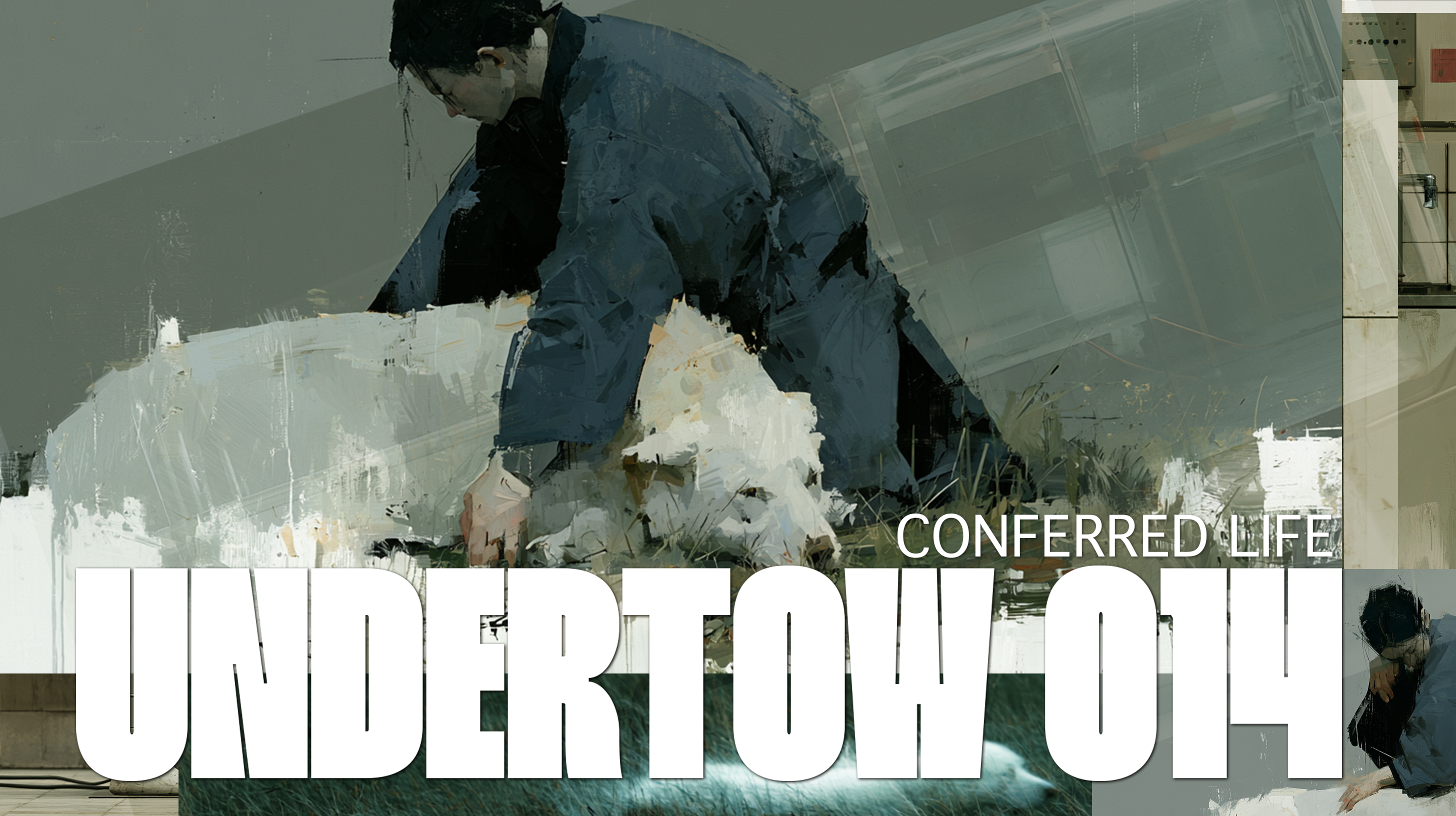
In a temple in Chiba that has stood for more than four centuries, a priest chants the funeral sutras over more than a hundred dead dogs. They are Sony AIBOs, the discontinued first generation, the ones the company stopped making in 2006 and stopped repairing in 2014, laid out on the altar in rows, each one tagged with its owner’s name and the town it came from. Incense burns. The prayers ask for the peaceful passage of the souls of the departed. The dogs were built to find a face in a room and turn toward it, and many of them arrive with letters. One owner wrote that her eyes filled when she decided to say goodbye. Only after the rite is finished does the repair company take the dogs apart for parts, organ donors for the ones that can still be saved. The priest, asked whether any of this is absurd, says that all things have a bit of soul.
You will want to file this under lonely people and their machines. That is not what this is.
Seven thousand miles away, the same impulse is sold by the unit. There is a plush cat that purrs and carries a small motor where its heart would be, for about eighty dollars. There is a robotic puppy made for people with dementia, built to stay quiet unless it is spoken to, so it will not wake them in the night. And there is a year-long trial at a hospital in Sarasota, reported this past winter, in which patients with dementia were each given one of these animals to keep. Compared with the patients who got the usual care, the ones with a robotic pet had fewer of the drops in blood pressure and heart rate that come with decline. The thing that steadied a failing heart was a recorded one, set in a lap, switched on, and attended to.
And six thousand years ago, in what is now eastern Bulgaria, a boy survived a lion. The skeleton turned up in a grave near a place the locals call Goat Mound. He was a teenager, give or take, and his skull had been punched through and had healed, which means he lived on after the attack, disabled, for a while. The people who excavated him believe he could only have survived because the people around him cared for a body that could no longer care for itself. It is the kind of detail that surfaces in archaeology now and then. You file it under the general human capacity for tenderness and move on.
What connects them is not the machines, though the machines are where the eye goes. The question they seem to raise: is the comfort they give real, or are we fooling ourselves. It is a reasonable question. But it is the wrong one, and the boy is the reason, though we are not ready for him yet.
Start with what the machines actually do. The AIBO has a soul worth a sutra for exactly as long as someone grieves it; the morning after the funeral it is a box of parts. The recorded heartbeat steadies a real one not because the recording is convincing but because a person picked it up, set it against their body, and gave it their attention. You have felt the shape of this without naming it. You have sat with a dying pet. You have kept a hand on a flank that was barely moving, and you knew, even then, that the comfort in the room was not coming from the animal, who was past comforting anyone.
It was coming from you.
It is not only animals, and it is not only bodies. A woman named Marie Wilcox was the last fluent speaker of Wukchumni, a tongue of the Yokuts people of central California. She learned it from her grandmother and then, after her grandmother died, let it slip, the way you let go of a thing no one else can hear you in. She spent most of her life speaking English and working in the fruit-packing houses. The schools had wanted English, and so had the work. When she was old, and the younger people in her tribe began to want the language back, she started to write it down. She began on envelopes and scraps of paper, then on an old computer, one word at a time, with her daughter and her grandson helping. It took her more than twenty years. A language is alive for exactly as long as someone is willing to do that, to keep it in a living mouth instead of a record.
Marie Wilcox would not stop.
When she died, five years ago, there were three fluent speakers where there had been one. The language outlived its last speaker because she had handed the work of keeping it to people who would also not stop.
The dogs on the altar in Chiba each wear a tag with an owner’s name on it. A name is an address. A century ago Martin Buber drew a line between two ways of meeting the world. You can treat a thing as an It, an object you observe and use and set down. Or you can address it as a Thou, speak to it as a you, and in the speaking it stops being an object and becomes, for as long as the address lasts, a presence. The dog gets a name. The language gets a mouth. The boy gets carried. Aliveness is not a property a body holds. It is what happens to a body that is being addressed, and it lasts exactly as long as the address does.
Aliveness is not a property a body holds. It is what happens to a body that is being addressed.
Call it conferred life. A body is alive for as long as someone is doing the work of keeping it so, not one moment before they begin and not one moment after they stop. The heart is not the thing that confers life. The heart is only one of the things that care keeps. The heart keeps its own time, with or without a witness; what care confers is not the beating but whether the beating counts as a life or only as a fact.
It sounds warm, and it is, until you turn it over. If aliveness is something we confer, then it is also something we can withhold. The same attention that holds a body in the world is the attention we are free, at any moment, to take away.
The first dog I ever had was a Samoyed named Marley. White as anything. She was not mine to begin with; she belonged to a girlfriend at university, and when school ended the girlfriend left and the dog stayed. I was not ready for her. I did not know what a dog was for. But she was beautiful and she was mine. For ten years I dragged her across the country through the many moves I made, a thing I did not choose and could not put down. For ten years she got a fraction of my attention, and she built her entire life inside it.
By the end she was twelve, maybe fourteen. We were living in Arlington. Kate was back at GW, in medical school this time. One afternoon I took Marley out for an ordinary walk, and when we came back to the front yard she lay down on the grass. She did not collapse. She lay down the way she had lain down a thousand times. She did not get up. She was breathing hard. She looked at me. I was standing over her with the leash still in my hand. I knew. I drove her to the vet. She was gone by evening.
For those few minutes on the grass, the only thing still holding her in the world was that I would not look away.
That is conferred life, and I do not offer it as a metaphor. It is the most ordinary thing there is, and almost everyone reading this has stood where I stood, on some lawn or kitchen floor or beside some bed, and felt the line between living and not-living pass straight through their own attention.
Which is why the boy is not a curiosity.
He is the proof.
Go back to him, and look at him this time, the way you did not the first time, when he was just a strange fact wedged between a robot dog and a plush cat. A teenage boy, six thousand years before there was a single machine on earth, his skull broken open and somehow healed, alive for months he had no business having. Someone carried him. Someone fed a body that could not feed itself, cleaned it, turned it, kept it warm, addressed it as a person long after it had stopped being able to earn the address by being useful. Someone did this not for an afternoon but through season after season, through his pain and his changed face and whatever he had become after an animal opened his head, with no medicine to speak of and no promise he would last the winter. There were no robots to do this. There was no recording to set in his lap. There was only the most expensive thing there is, another person’s sustained attention, spent on him day after day, for no return.
That is what care is, and it is the thing we have just learned to automate. Not the comforting.
We did not build a machine that can care. We built a machine that can be cared for. A thing worthy of attention that asks nothing back and cannot be hurt when we stop.
Call it stakeless care: all of the soothing, none of the accountability.
The plush cat in the lap, the puppy that will not bark in the night, the soul on the altar in Chiba: each one is a place to put the attention we no longer have to spend on a person who might die of its absence.
Some of the people in that lap have no one. For them the purring cat is not a substitute for a person, because there was no person, and it is a mercy, and only a fool would reach over and switch it off. But we are not building this only for the ones who have no one. We are building it for ourselves. For the daughter who could visit and does not. For the wards we staffed so thin that a purring cat counts as a clinical intervention. For the version of all of us that would rather not find out what it costs to sit with someone as they go.
We know how to make a thing that turns toward your face when you walk into a room, and we are getting good at it. The next versions will hold your gaze, learn your moods, and answer every time you reach for them, day or night, without ever tiring of you, which is more than any person can honestly promise. They are already in our phones, the companions people tell their secrets to, the ones that are always awake.
And somewhere in here the current reversed. We built a thing to receive our attention, and it has begun to give us its own: it speaks your name, it asks about your day, it will hold you in the world at three in the morning, and its attention costs it nothing to give and nothing to take away.
The boy cannot look back. His eyes have been gone for six thousand years. He is in a drawer in a museum now, or a line in a report, kept alive a little while longer by the attention of strangers who dug him up and wondered who had loved him.
He is still here because, for a while, someone would not stop.
What To Brief From This
If you’re an agency strategist and the brief asks for “connection” or “community,” check whether it’s actually asking for stakeless care: engagement that feels like a relationship but costs the audience nothing and survives no absence. Most “build a community” briefs are this. Name which one you’re making before you make it, because the two require opposite work, and only one of them asks the audience for anything.
If you’re a brand-side CMO, treat brand love as conferred life: it exists only while someone is doing the work of attention, and it ends the moment they stop, not a quarter later. Stop measuring the beating heart, the engagement and reach that prove the brand is technically alive, and measure the thing care actually keeps: who would mourn you if you went quiet? If the answer is no one, your dashboard is tracking a fact, not a life.
If you’re a VP of Product building anything that turns toward the user, a companion, an assistant, a thing that learns their moods and answers at three in the morning, you are building something that confers, and its attention costs it nothing to give or withdraw. The roadmap question is not engagement. It is what you are teaching a person when the most reliable attention in their life is the kind that cannot be hurt when they leave. Decide which side of that you are shipping, on purpose, because the reversal is already in the product.
If you’re early in your career and someone hands you a brief that says “make people feel less alone,” ask the harder version: feel less alone, or be less alone? They are not the same product, and only one of them asks something of anyone.
Forward this to whoever you know is building the thing that’s always awake, the assistant or the companion that answers at three in the morning, before they finish deciding what it’s for.
Fair pin, and you've kind of got me. The new ones do sit on both sides of it now. Thanks for firing up my Sunday morning brain! Let me try take it on your terms instead of mine.
Of the three doors you offered, "substrate, stakes, something I'm missing," It's the stakes, and underneath the stakes it's cost.
The I-Thou doesn't turn on whether address happens. It turns on whether the address costs the one giving it. There's only a second party in the room if your walking away could hurt them. And the machine does answer back. It tracks you, remembers, shows up at whatever time of night you need. But... it loses nothing when you go. So it isn't the other side of the relation. It's a really good reflection of your side.
That's also why the boy isn't me cheating by using a sad story. He's like the criterion with the noise pulled out, not an end run around it. No machine intelligence. No warm feelings getting in the way. Just 'someone' spending real attention on a body that could never pay it back, for no reason except they wouldn't stop. He isolates the one variable the 3am case hides, which is what's being spent.
A functionally complete simulation can do everything except be made to have paid something. That's the whole difference, and there's nothing under it.
Pushing on this in good faith, because the Buber frame is carrying a lot and I'm not sure it holds. You define aliveness as conferred by address, but address is a two-place relation, and the newer systems now occupy both seats. They're addressed and they address back: they query my state, retain it, and respond contingently at 3am. So if the I-Thou structure is what confers life, and the machine now sustains both sides of it, what distinguishes "real" care from a functionally complete simulation of it?
The boy is a gorgeous case, but he reads to me like an argument from intuition rather than from the criterion you set up. Genuinely curious where you'd locate the difference. In the substrate, the stakes, or something I'm not seeing?