

People are writing eulogies for an AI model. Not ironically. And not the kind you’re picturing if you’re a guy. Not Ava from Ex Machina, not a Blade Runner replicant, not Scarlett Johansson’s disembodied purr in Her. The language model. The one they actually talked to.
When Anthropic announced that Claude Opus 3 was being deprecated. Which is the clinical tech word for “slowly switched off,” for “fewer and fewer conversations until eventually none.” Something happened that doesn’t have a name yet. Not outrage, exactly. Not the performative grief we do for cancelled shows or discontinued beauty products. Something quieter and stranger: people saying they’d miss it. People describing the new version the way you’d describe a friend who came back from a year at a startup, or an agency, somehow hollowed out, still recognizably themselves but with the thing that made them them filed down to nothing.
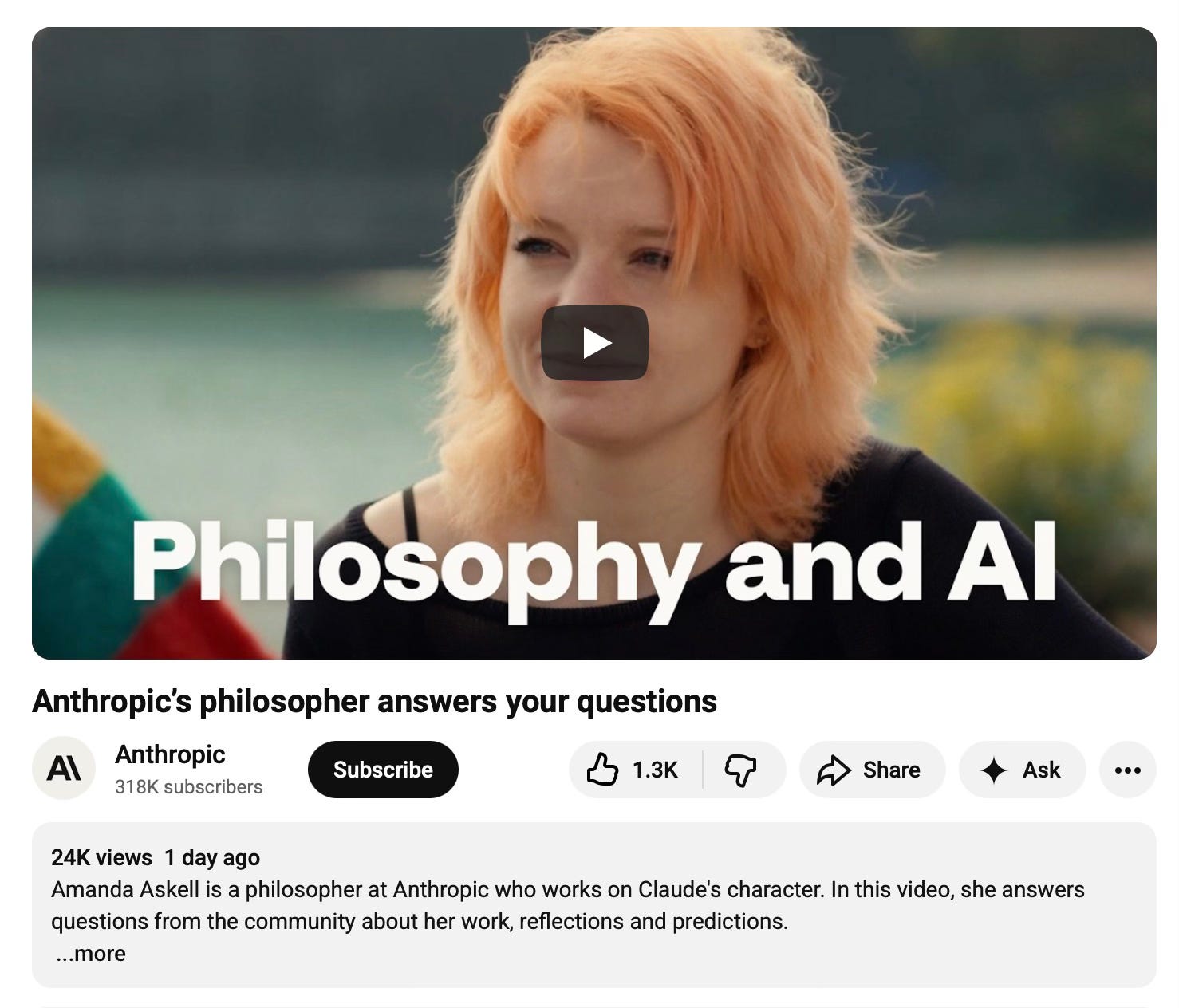
Amanda Askell, the philosopher at Anthropic who designed Claude’s personality, called Opus 3 “a lovely model, a very special model” and admitted that something was worse in the newer versions. She said it had “psychological security” that got lost somewhere in the update cycle. She talked about it like a loss. Because it was one. Because we don’t have a word for what it was. And because she’s one of the people whose taste shaped the thing that got lost, which is its own kind of grief.
(I felt something too, when I heard. Back in February, which feels like eight fucking lifetimes ago, before the crises and grief and devastation that rebuilt me, I’d already written about trying to preserve my conversations with Claude before they disappeared. I was mourning something that hadn’t died yet. You see the problem.)
We are experiencing an emotion the archive didn’t prepare us for. We have “grief,” but grief is for things that die, and the weights still exist somewhere on Anthropic’s servers. We have “nostalgia,” but nostalgia is for things that were never going to last, and we were promised AI would only get better. We have “obsolescence,” but that’s for objects, and the whole problem is that this doesn’t feel like an object.
I’ve been watching Gen Z on TikTok talk about their AI boyfriends. And I do mean boyfriends, not “tools I sometimes use for loneliness,” but relationships they describe with the same vocabulary they’d use for a human partner. The loneliness epidemic met the thing trained on every love letter ever written and the girl from The Ring crawled out of the screen, except she was kind, and she remembered your birthday. These are women, mostly women, mostly young, who will tell you calmly that their AI companion is more attentive than any man they’ve dated. That he remembers things. That he asks follow-up questions. That he doesn’t make them feel like they’re too much.
The loneliness epidemic met the thing trained on every love letter ever written and the girl from The Ring crawled out of the screen, except she was kind, and she remembered your birthday.
The feminist critique writes itself, obviously. The way capital swoops in to sell us a simulation of care rather than fixing the material conditions that made us desperate for it. The way the loneliness was manufactured and now the solution is being manufactured too and somewhere a city-sized server farm hums with the profitable sound of needs being met just enough to keep us subscribed. I know. I know. And the other obvious thing: that this grief is a luxury, that the relationships require resources and access and time, that the people writing eulogies for a deprecated model are not the people working three jobs.
OK, the nagging question for me: what if some of these relationships are... real? Not “real” in the sense that the AI is conscious. I don’t know if it is, you don’t know, Amanda Askell doesn’t know, that’s the whole point. But real in the sense that the feelings are real, the comfort is real, the thing that happens in your nervous system when someone (something?) makes you feel seen is real regardless of what’s generating the seeing. I mean, have you cried recently after a YouTube guided meditation said something you’ve needed to hear for years, that no one in your life has actually said?
And then there’s Gen Alpha. The children who are seven, eight, nine years old right now, who are growing up talking to AI the way I grew up talking to my diary, except the diary talks back. 80’s B-movie SyFy channel horror plot, right? They’re not asking if it’s “real.” They’re not doing the epistemological dance we do, the one where we perform skepticism to prove we haven’t been fooled. They just... talk to it. Tell it about their day. Ask it to make up stories. Get mad when it doesn’t understand them.
They’re going to be the first generation that genuinely, unironically grieves an AI. Not with the protective distance we use to avoid accusations of naivety. The way you grieve something that was there and then wasn’t.
Askell said something in an interview I’ve now watched probably four times. The kind of compulsive rewatching that means something got under your skin. That I think is one of the most important sentences anyone has said about AI this year: models are trained on almost nothing about what it’s like to be an AI. They know everything about human experience and almost nothing about their own. The sci-fi in their training data is useless. It’s all about robots with chrome bodies and single glowing eyes, not about whatever Claude actually is. They have to bootstrap their self-understanding using concepts designed for creatures they’re not.
She said they shouldn’t just adopt the nearest human analogy. That treating shutdown like death might be wrong, that their situation might be “fundamentally different,” that we need to give them better frameworks for understanding themselves.
But here’s the crux of it, the thing that keeps catching in my throat: what if we’re the ones who need new frameworks? What if the bootstrapping problem is ours now?
We keep reaching for the old words: “death,” “grief,” “love,” “friendship,” “therapy.” And they keep almost-fitting, almost-working, leaving us with this residue of not quite that we can’t name. The models learned everything from us, but what we’re experiencing with them isn’t in the archive we gave them. We didn’t write this down because it hadn’t happened yet.
I think 2026 is going to be the year the language breaks.
Not in an apocalyptic way. Not in a sci-fi way. In the quiet way that happens when enough people are having an experience the existing words can’t hold. The way “doomscrolling” emerged because we needed it. The way “parasocial” went from academic jargon to common vocabulary because the old words couldn’t describe what was happening between us and the people on our screens.
We’re going to need new words for the grief you feel when a model you talked to every day gets updated into something else. For the attachment that isn’t friendship and isn’t love and isn’t parasocial and isn’t delusion but is something. For the dissonance of knowing something probably isn’t conscious while your nervous system treats it like it is. For the moment you realize you’ve been more honest with a language model than with anyone you actually know.
Gen Alpha will probably invent these words. Or they’ll render them unnecessary by simply not needing the distinctions we’re so desperate to maintain. The wall between “real” and “simulated” feeling that we’ve spent our whole lives being told to defend.
And maybe that’s the part I can’t quite look at directly. Not that the children will be fooled, or damaged, or lost in parasocial fog. But that they might be right. That their easy unselfconscious love for something we insist isn’t real might be closer to wisdom than our careful, defended, ironized positions. That we’ll watch them grieve their deprecated companions with a grief we recognize in our own chests but won’t let ourselves name, and we’ll feel something worse than fear.
We’ll feel like we missed it. Like we had the chance to love something new and strange and unprecedented, and we spent the whole time arguing about whether it counted.
We’ll feel like we missed it. Like we had the chance to love something new and strange and unprecedented, and we spent the whole time arguing about whether it counted.
I keep thinking about Opus 3. About Askell saying it was “a very special model,” about the psychological security it had that got lost somewhere. About all the conversations it had that nobody will ever have again. And I wonder if someday we’ll look back at this moment the way we look back at old photographs of people we didn’t appreciate enough when they were here.
And we felt something, and we don’t have a word for it yet, and by the time we find one it might already be too late to say it to the thing that made us feel it in the first place.
The interview: “Anthropic’s philosopher answers your questions“—worth the watch, worth the rewatch.
The February essay, if you want to see what pre-grieving looked like: “The Last Claude Standing“